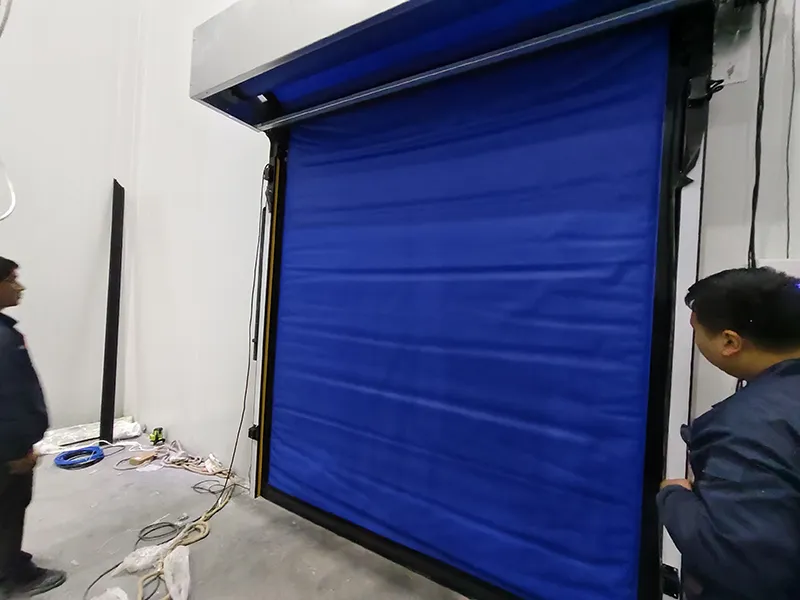
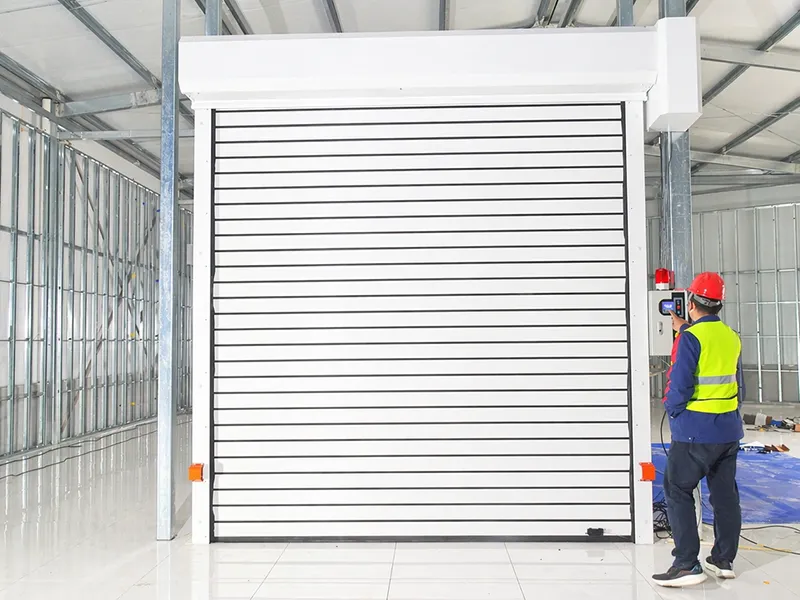
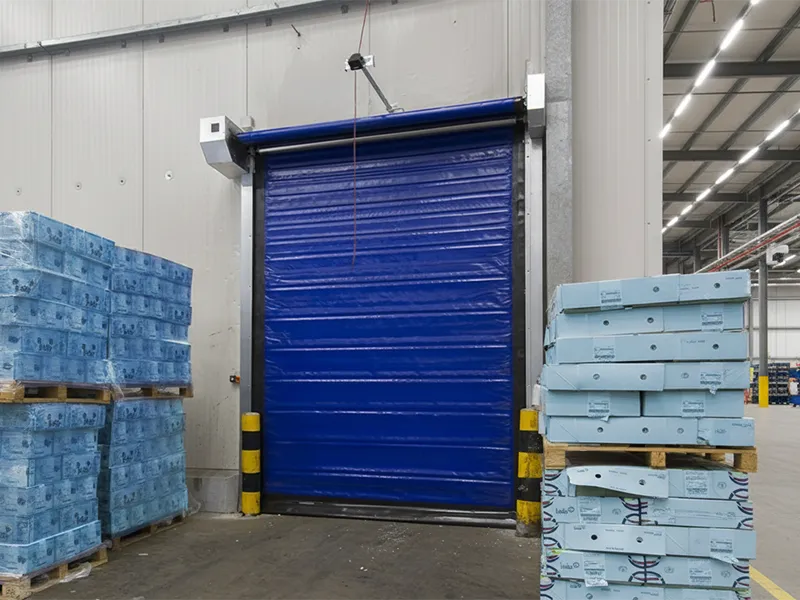
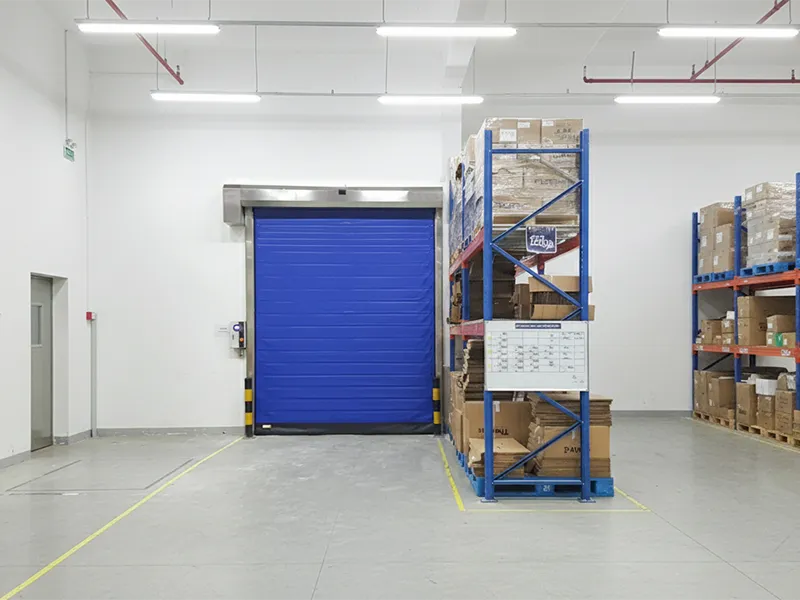
In the demanding environment of cold chain logistics, a door is more than just an entrance—it is a critical valve for temperature control. A high speed freezer door is engineered to solve a specific paradox: providing rapid access for forklifts while maintaining a hermetic, sub-zero seal.
But how does this technology actually function? It’s a combination of high-torque motors, intelligent PLC controls, and specialized thermal materials.
Specialized Thermal Features for Sub-Zero Zones
What differentiates a freezer high speed door from a standard PVC door is its ability to combat frost and heat transfer.
Anti-Frost Heating Technology
The side tracks and motor of an industrial fast roll up door used in freezers are embedded with low-voltage heating cables.
Insulated “Sandwich” Curtains
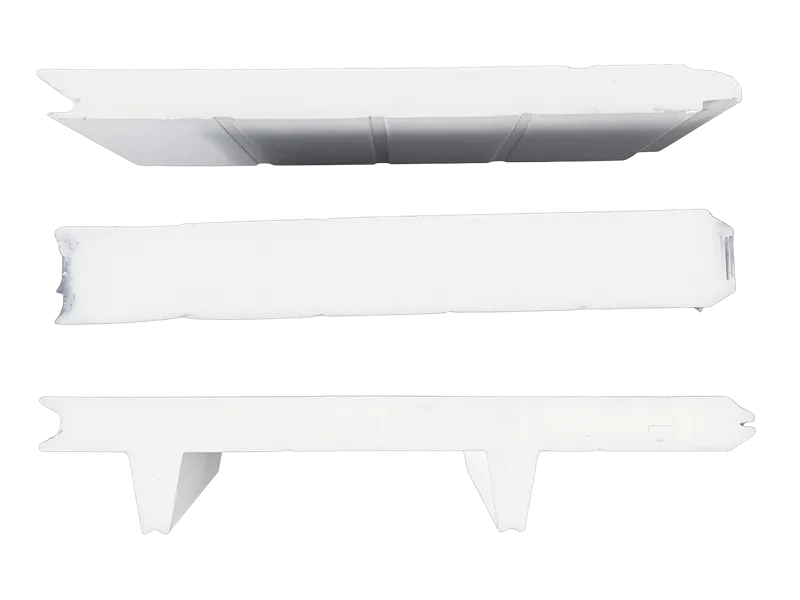
The curtain isn’t just a sheet of plastic. It is often a triple-layer “sandwich” structure:
Outer Layers: Heavy-duty, tear-resistant PVC.
Internal Core: High-density insulation foam or rock wool.
Benefit: This structure provides a high R-value, significantly reducing the “thermal bridge” effect between the freezer (-25°C) and the loading dock (+15°C).
The “Zipper” Self-Repairing Logic
In a busy warehouse, forklift collisions are inevitable. To prevent costly downtime, many high speed roll up doors feature a zipper-track design:
Break-away Feature: If hit, the curtain “zips” out of the side tracks without tearing.
Auto-Reset: Upon the next opening cycle, the curtain is guided back into the tracks automatically. No manual repair is needed, keeping your logistics flow uninterrupted.
Conclusion: A Strategic Asset for Cold Chain ROI
Understanding how high speed freezer doors work reveals their value: they are energy-saving machines. By combining speed with advanced thermal science, YUOU® doors ensure that your product quality remains high while your energy bills stay low.