In the fast-paced logistics and transportation industry, the efficiency of cargo access is a critical factor in operational success. Roll up doors for trucks (also known as dry van roll up doors) have become the industry standard, replacing traditional swing doors in urban delivery and long-haul transport.
By utilizing a vertical opening mechanism, these doors allow vehicles to back up directly to loading docks without needing extra side clearance. At YUOU®, we engineer these doors to withstand the rigors of the road, ensuring security and ease of use.
Detailed Structure: The Anatomy of a Truck Roll Up Door
To ensure a truck roll up door operates smoothly over thousands of miles, its components must be precision-engineered:
High-Strength Door Panels
The panels are the primary barrier. Depending on the cargo requirements, these are typically:
Aluminum Panels: Preferred for their lightweight and corrosion-resistant properties, helping to maximize the vehicle’s payload capacity.
Composite/Plywood Panels: Often used in dry vans for their cost-effectiveness and impact resistance.
Insulated Panels: Essential for refrigerated truck doors, featuring a foam core to maintain strict temperature control.
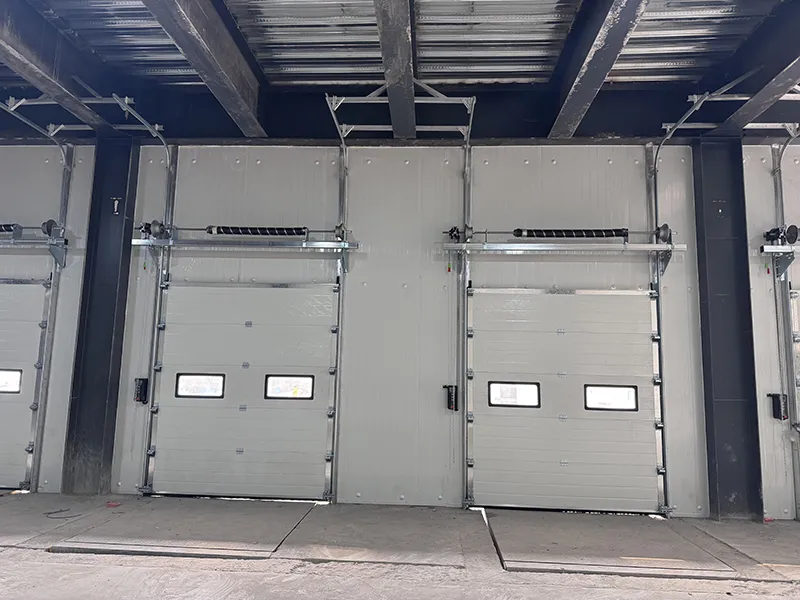
Track and Roller System
The tracks guide the door into a horizontal position under the truck roof.
Vertical & Horizontal Tracks: Constructed from heavy-duty galvanized steel to resist bending.
Rollers: High-cycle nylon or steel rollers ensure a quiet, friction-free movement, even when the vehicle is tilted or on uneven ground.
The Counterbalance Mechanism (Spring System)
The heart of the door’s ease of use.
Torsion Springs: These springs provide the tension needed to offset the weight of the panels, allowing a single operator to lift the door with minimal effort.
Lifting Cables: High-tensile aircraft-grade cables connect the spring shaft to the bottom of the door.
Weather Seals and Locking Hardware
Side & Top Seals: Flexible EPDM rubber prevents rain, dust, and road salt from entering the cargo area.
Bottom Seal: A reinforced “loop” seal that cushions the impact when closing and creates a water-tight barrier.
Locking Latch: Typically features a padlockable cam-over-center design to ensure cargo remains secure during transit.